How to Ride a Double-Decker Bus for the First Time: A Beginner's Guide
The bus pulls in and, for a second, it looks wrong — a perfectly normal bus with a second storey bolted on top. It isn't wrong, and it isn't difficult. Riding a double-decker is mostly the same as riding any other bus, with a handful of details that catch first-timers out: the ticket you buy, the door you use, where you sit, and how you come back down again. Get those four things right and the ride looks after itself.
Decide the Route and the Ticket Before You Leave
Two questions do most of the work here: where does this bus actually go, and how do I pay for it?
Choosing a route
Route numbers repeat across a city, and the same number runs in both directions. Read the destination board on the front of the bus, not just the number. A service marked "Circular" or "Loop" may not return to the stop where you got on, which matters if you plan to hop off and re-board later.
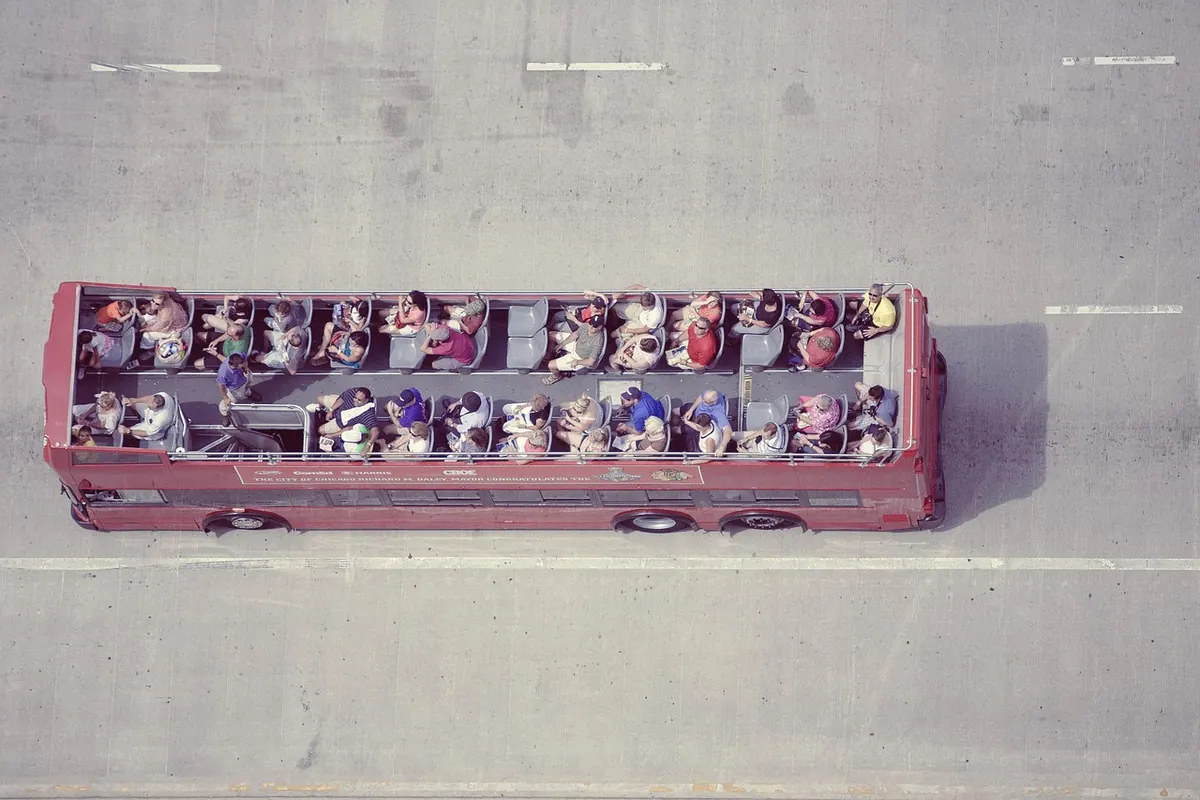
For a first ride, open-top sightseeing routes are the friendliest option. The driver expects visitors, commentary usually runs in several languages, and the stops are clearly marked. Ordinary commuter double-deckers are cheaper and often just as scenic — a top-deck seat on a normal city route can beat a paid tour. If there's one specific thing you want to see from above, ask at your hotel desk or ask the driver which direction of travel gives you the view, and sit on that side of the bus.
Paying
Payment rules vary more than most people expect. Many city buses no longer take cash at all. Others accept coins but want the exact fare, with no change given. Some sell tickets on board from the driver or a conductor; others expect you to buy beforehand from a machine, a kiosk or the operator's app. Check the operator's own website for your specific route the day before you travel, not the morning of.
A contactless bank card or a stored-value travel card covers most urban buses. If you plan more than two or three journeys in a day, ask about a day ticket — it usually costs less than buying singles one at a time. Keep the ticket or the app receipt until you have finished riding; some systems ask to see proof of payment mid-journey.
Find the Stop and Make Sure the Bus Stops for You
Bus stops are not always obvious. Sometimes you get a shelter, a timetable and a lit sign. Sometimes you get a pole with a small plate listing route numbers. Read that plate: it tells you which routes serve the stop and, often, which direction they head. A stop on the opposite side of the road serves the opposite direction, even when the route number is identical.
Stand somewhere the driver can see you, close to the kerb, and raise a hand as the bus approaches. In many places a bus only pulls in if you clearly signal, and a driver scanning the pavement may not spot someone waiting on a bench behind a tree. Have your card, coins or phone ready before the bus arrives, so you are not holding up the queue while you search a bag.
If you are unsure of your stop, tell the driver your destination as you board and ask them to call it out. Most will. Sitting near the front on the lower deck also makes it much harder to sail past your stop.
Boarding: The First Thirty Seconds
Boarding a double-decker follows a simple rhythm, and breaking it is what creates the bottleneck behind you.
- Let passengers off first. Stand to the side of the door, not in front of it.
- Step on at the front unless signs direct you otherwise. On routes with two sets of doors, there is usually a marked entrance.
- Pay or scan, then keep moving. Do not count coins in the doorway.
- Walk forward and take a seat, or stand behind the marked line if the lower deck is full. Never stand on the stairs while the bus is moving.
- Keep luggage with you and out of the aisle. City buses rarely have a luggage hold, and a suitcase left in the gangway is a trip hazard for everyone.
Going Upstairs
The staircase is the one part of a double-decker that genuinely needs care. Take the handrail, climb one step at a time, and do it while the bus is at a standstill if you can. Some operators ask passengers not to use the stairs while the vehicle is moving; if a sign says so, find a seat downstairs instead.
Upper-deck rules and habits
- The front seats give the best view, and are also the coldest in winter, the hottest in summer, and the windiest on an open-top bus. Sit there for the view and dress for it.
- Stay seated while the bus is moving. Standing upstairs is restricted or banned on many services.
- Keep feet off the seats and bags out of the aisle. Space upstairs is narrower than it looks.
- On open-top buses, keep your head, arms and camera inside the vehicle. Branches and low structures do not move out of the way.
- Hold on to hats, sunglasses and loose paper near the front. The airflow up there is stronger than you expect.
- Keep your voice down. The top deck is where commuters nap and locals read.
- If you start to feel motion sick, move down or sit toward the middle of the upper deck, where movement is gentler.
Getting Off Safely
Press the bell once, firmly, when you can see the stop before yours passing by — not three stops early. On buses that use a pull cord, a single steady tug is plenty. Then wait. Stay in your seat until the bus has fully stopped, stand up slowly, and check the seat, the floor and the space under the seat in front of you. Phones and umbrellas are the two things most often left behind on a double-decker.
Coming down the stairs takes longer than going up. Use the handrail and take one step at a time. Step out onto the pavement rather than into the road, then walk clear of the door before you check your phone or your map. If you need to cross, do it where you can see traffic in both directions — never in front of the bus you just left, because the driver cannot see you and other traffic cannot see past the bus.
A Few Practical Notes
If you are travelling with a mobility aid, a wheelchair or a pushchair, check the operator's accessibility information in advance. Vehicle layouts differ, and knowing where the accessible space and entrance are saves a lot of shuffling at the kerb. If you feel unwell during a long ride, tell the driver or a staff member rather than waiting it out.
Finally, ride once without a destination. Buy a day ticket, take a route that crosses the city, sit upstairs at the front, and get off wherever looks interesting. That is the whole point of the second storey, and it is the reason the double-decker has survived everywhere else it went out of fashion. One ride and you will know which seat you want next time.
Photo: Ben Kirby / Pexels
You Might Also Like
Combine day passes, off-peak travel and short walks to turn a double-decker bus into an affordable all-day adventure, with practical tips for planning routes and timing.
Battery-electric double-deckers pair high-capacity bodies with electric drivetrains, and their range, charging and route planning decide whether they work for a given network.